Debra Bush Systems & Experience Strategist

Give me the messy problem.I'll figure out what's getting in the way and make it work better.

I find the gap between how a system is supposed to work and what actually happens when people use it.

The work / 02

Different systems. Same underlying problem.

The environments and tools change. The underlying work is consistent: understand what people are trying to accomplish, find what is getting in the way, and change the appropriate part of the system.

  1. Knowledge systems and information findability

    Information can exist and still fail people when they cannot find it, recognize it, or understand how to use it.

  2. Customer and user enablement and adoption

    Repeated questions, hesitation, and abandonment can reveal where a product or process is not helping people become capable and confident.

  3. Operational friction and process improvement

    Workarounds, repeated escalation, and hidden dependencies are signals to examine the actual workflow before changing it.

  4. AI enablement and practical adoption

    Introducing AI is not the same as making it useful. The work starts with the outcome, the people involved, and the constraints around them.

  5. Business and product systems and workflow design

    A system can technically function while real use exposes assumptions, gaps, and unnecessary dependencies. Those signals help define what needs to change.

Professional evidence / 03

Selected professional work.

Three environments reveal one recurring capability: find what prevents people from succeeding, then change the part of the system that causes it.

01 / Information systems

Patterson Buchanan / Everlaw

Turning opaque records into usable information.

What was getting in the way
A searchable collection still required people to open records to understand what they were looking at.
What Debra changed
She developed a repeatable approach to naming and metadata that made records easier to recognize, navigate, and retrieve within the existing platform.
What the evidence demonstrates
This simplified illustration shows the shift from opaque identifiers to useful information. It is not a reproduction of client data.
Illustrative example / completely fictionalNo Patterson Buchanan or Everlaw data is reproduced.

Before / identifiers

  • ABCXYZ_1234
  • ABCXYZ_4321
  • ABCXYZ_2413

After / recognizable information

  • 2010-01-24 - ABC v XYZ - Complaint
  • 2010-01-24 - ABC v XYZ - Amended Complaint
  • Letter - Smith - Doe - ABC v XYZ - Statement of Representation - 2010-01-24

Fictional illustration. All names, identifiers, dates, case information, and document examples are completely fictional and created solely to illustrate the information transformation. Any similarity to an actual person, matter, document, or record is purely coincidental. This illustration does not reproduce confidential Patterson Buchanan or Everlaw data. A future case study will explain how metadata fields provide substantially greater clarity than this simplified homepage example.

02 / User enablement

TheCrew

Turning recurring support friction into self-service capability.

What was getting in the way
People repeatedly needed help with setup, configuration, and connecting to the service.
What Debra changed
She investigated the recurring friction and helped shape a launcher that guided setup and validation while becoming a persistent information hub.
What the evidence demonstrates
Surviving launcher artifacts show an actionable prerequisite prompt and a home for status, access, and community information.
TheCrew launcher prerequisite prompt stating that GTA V is not installed, with Install and Continue actions.
Original historical evidence / prerequisite recovery. The launcher identifies a missing dependency and offers a path forward.
TheCrew launcher home screen showing community content, server status, play access, and supporting links.
Original historical evidence / persistent hub. Connection access, service status, community content, and supporting links share one surface.

03 / Product workflows

Broken Compass

Building the workflow, then enabling people to use it.

What was getting in the way
A feature can technically function while its dependencies, constraints, and recovery paths remain unclear to the people using it.
What Debra changed
She built, tested, and refined complete product workflows, then organized the procedural guidance people needed to use them successfully.
What the evidence demonstrates
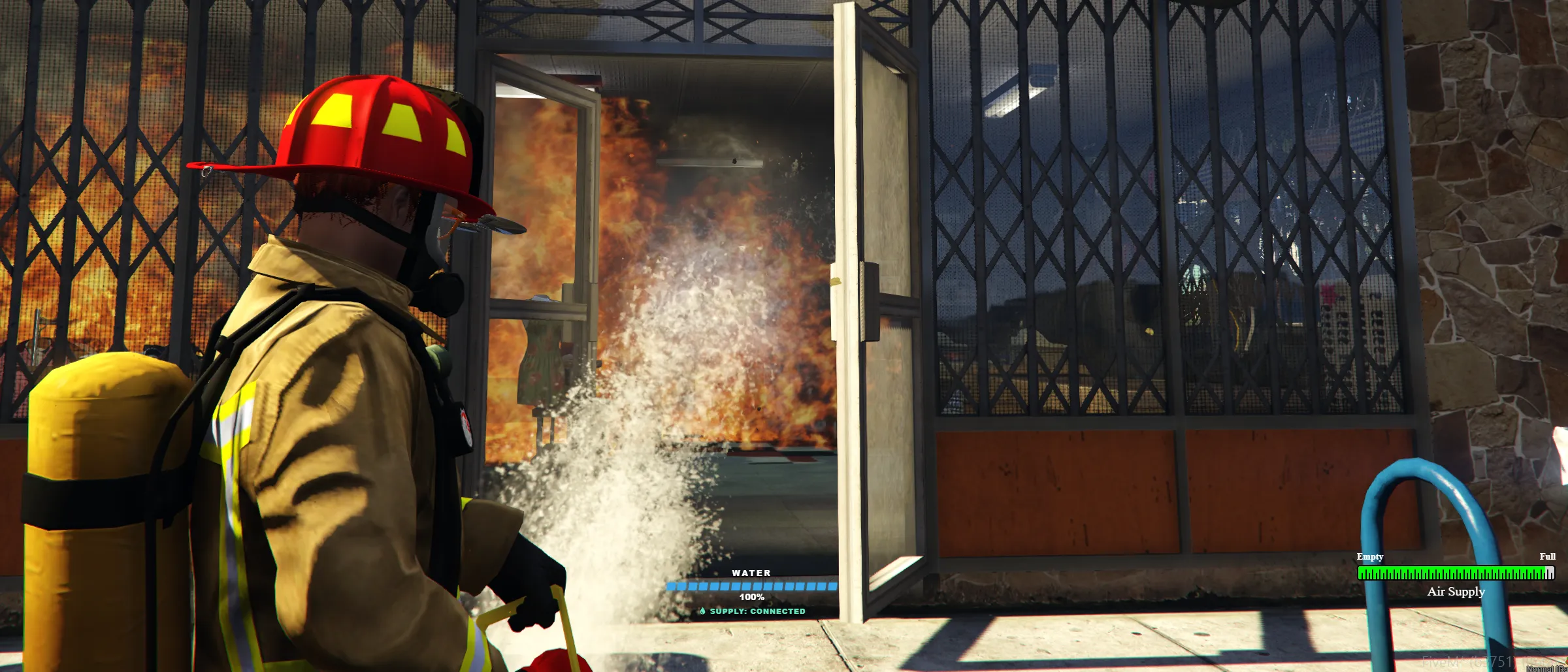
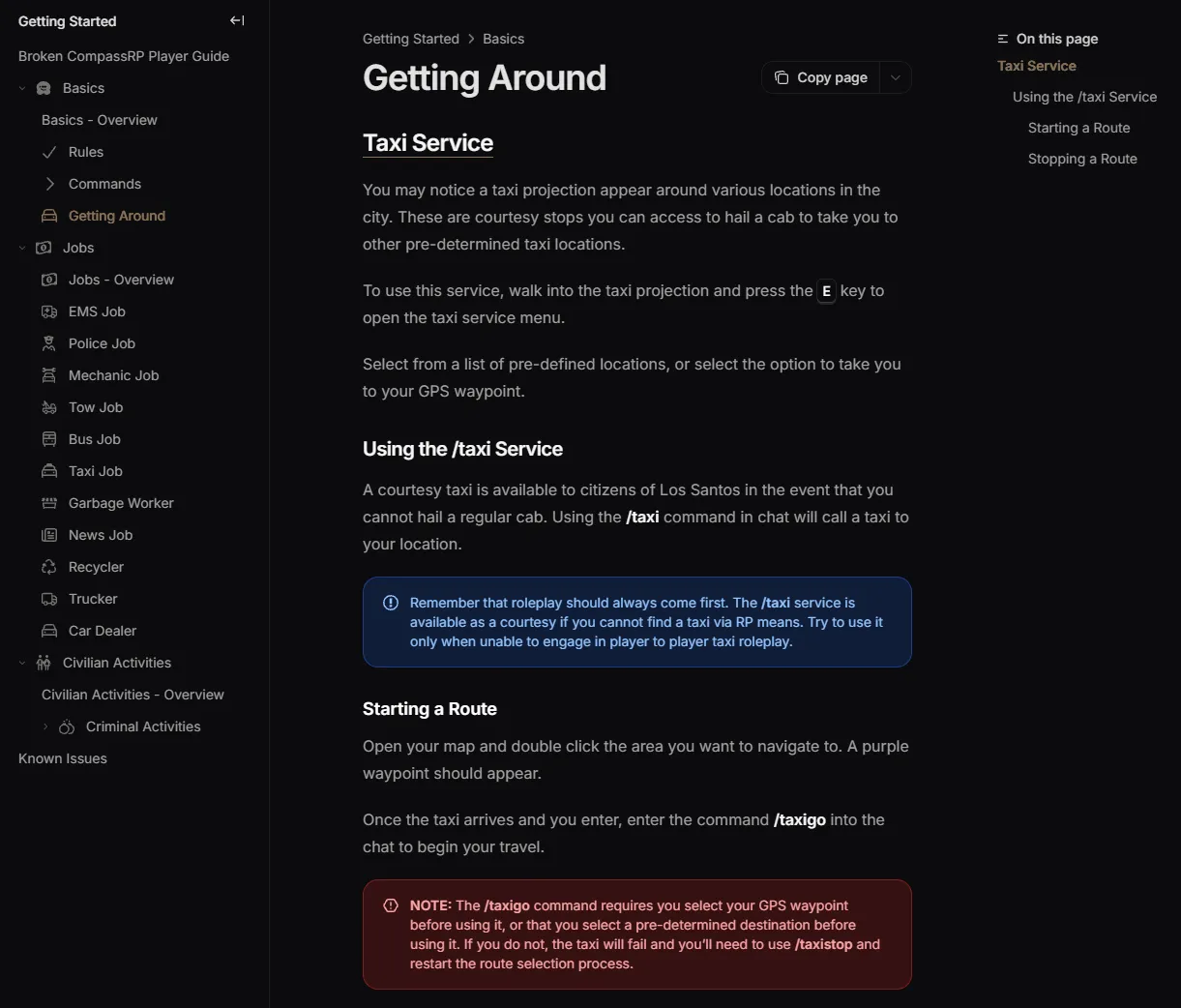
The implemented fire and hose workflow shows the capability in use. The Player Guide shows how complex procedures, constraints, and recovery guidance are made findable.
Broken Compass firefighter directing a hose at an interior fire while the interface shows a connected water supply.
Current product evidence / build + test The active fire and hose workflow shows its connected water-supply state during use.
Broken Compass Player Guide taxi procedure with navigation, constraints, and recovery instructions.
Current product evidence / organize + enable The Player Guide makes normal use, constraints, and recovery guidance available in context.

Independent Systems Investigation / Research in Progress

The outage ended.
The investigation didn’t.

A prolonged utility outage became the starting point for an independent investigation into prevention, restoration, customer information, resilience, and public accountability.

What began as a question about when the power would return expanded into a larger systems problem: how do customers make good decisions when restoration depends on changing conditions, operational dependencies, and incomplete information?

Don’t fall in love with the first explanation.

Infrastructure Risk

Prevent what can reasonably be prevented.

Incident Response

Reduce the duration of failure and make restoration state and dependencies legible.

Customer Resilience

Give customers enough trustworthy information to make mitigation decisions while their resources and options are finite.

Privacy-safe cropped DTE outage-status screenshot showing an estimated restoration date of September 3, 2026.
Firsthand documentary evidence / earlier restoration expectation. This privacy-safe capture displays an estimated restoration date of September 3, 2026.
Privacy-safe cropped DTE outage-status screenshot showing a later estimated restoration of end of day September 6, 2026.
Firsthand documentary evidence / later restoration expectation. A later privacy-safe capture displays an estimated restoration of end of day September 6, 2026.

Emerging recommendation under investigation

Customers need visibility into restoration state, controlling dependencies, and uncertainty—not merely a timestamp.

See the investigation

How I Think

The solution is a hypothesis. The goal is the goal.

I start with what people are actually trying to accomplish, look at what is happening in reality, and work backward from the friction. The answer might be a product change, better information, a different workflow, enablement, or something nobody had considered yet.

  • Hesitation is data.
  • Don't automate confusion.
  • Capability beats dependency.
See how I work